
My name is Pablo Reyes, and I decided to test this game personally after noticing it among the newer instant titles in several online casinos. I registered an account, explored the demo version, and then played a number of real-money rounds to understand how Pilot Chicken actually works in practice and whether the gameplay matches the expectations set by casino descriptions.
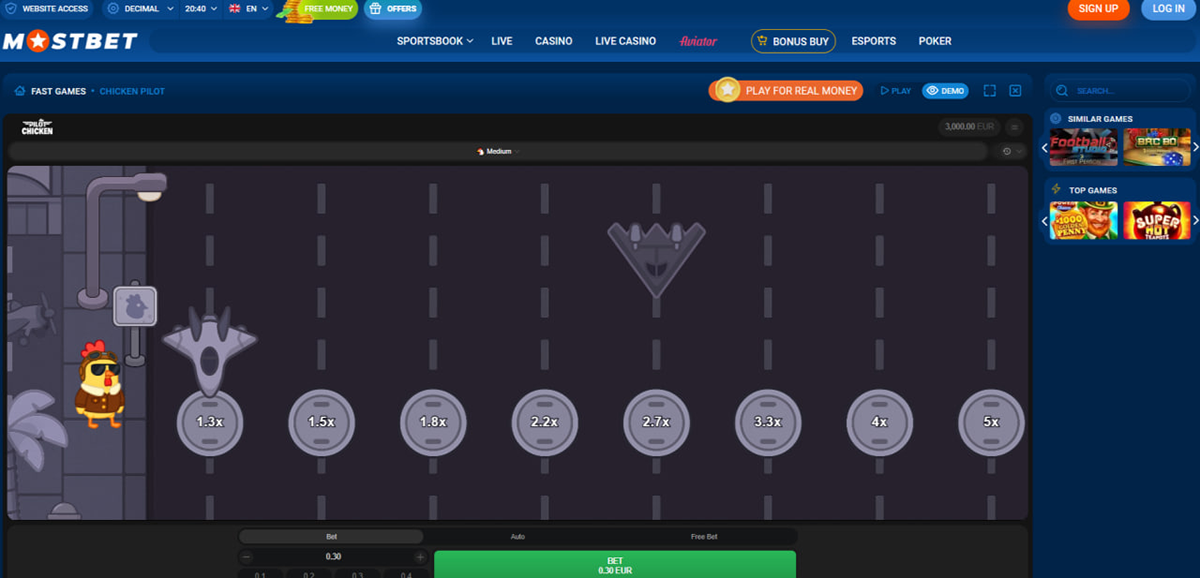
Game characteristics and technical parameters
I usually begin testing a new title by checking the technical parameters first, since they often explain how the gameplay will feel even before the first real session starts. That was exactly how I approached Pilot Chicken. I looked through the rules section and game limits to understand the betting range, payout restrictions and volatility settings. These details helped me estimate how aggressive the sessions could become and whether the game would suit short experimental runs or longer controlled play.
| Parameter | Value |
| Provider | Spribe |
| Game Type | Step-based multiplier arcade game |
| RTP | About 97% according to the game stats |
| Volatility | High |
| Minimum Bet | From $0.10 |
| Maximum Bet | Up to $100 per round |
| Maximum Win | Theoretical multiplier up to 1,000,000x |
| Release Date | January 2026 |
| Game Modes | Real money and demo mode available |
| Device Support | Desktop and mobile browsers |
After reviewing these specifications, I had a clearer understanding of what to expect from the sessions. The selectable difficulty levels turned out to be especially important, since they noticeably change the rhythm of the rounds. Even before serious play begins, these characteristics already show that the game is designed around controlled risk rather than long passive sessions.
Theme, game type and provider
The visual theme is built around an airport runway where a small chicken moves forward while planes pass by. The style is simple and slightly playful, but it does not distract from the gameplay. In practice, the Pilot Chicken game feels focused on timing and quick decisions rather than graphics.
This title is not a slot and not a classic crash game. The round is based on step-by-step movement where each safe step increases the multiplier. Most rounds last only a short time, so the gameplay feels fast and requires attention.
The game is developed by Spribe, a provider known for instant and multiplier-style titles. During my tests the game worked smoothly, with stable performance and a clean interface that made the sessions easy to follow.
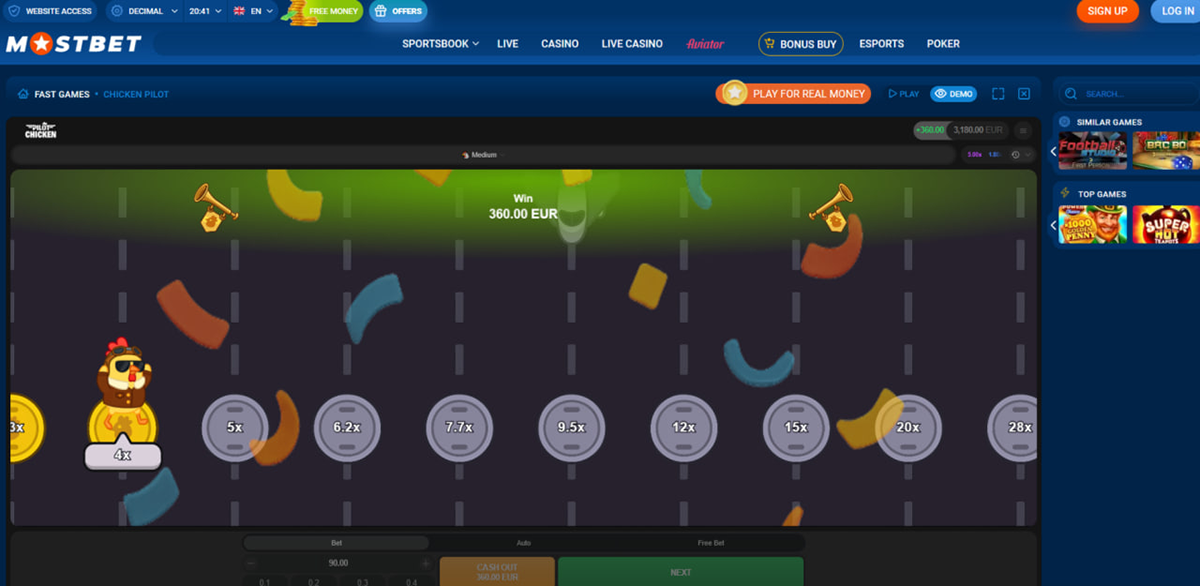
Rules and first playing experience
Before starting real sessions, I spent some time learning the basic rules and testing the interface. The main idea became clear very quickly: each round begins with a bet and a selected difficulty level, after which the chicken moves forward step by step while the multiplier grows. From a practical point of view, understanding Pilot Chicken how to play does not take long, but timing decisions become important after a few rounds.
- Account setup and access. I logged into my casino account and opened the game from the instant games section without any additional activation.
- Choosing the stake. I started with small bets to observe how the multiplier behaves and how quickly the risk increases during each round.
- Selecting difficulty. I tested Easy mode first and later switched between levels to compare how the rounds change in speed and volatility.
- Step progression. After launching a round, I moved the chicken forward step by step while watching the multiplier increase.
- Cashout decision. Each round required choosing the right moment to stop and secure the current multiplier before the round ended.
- Free testing. I also tried the Pilot Chicken demo mode to compare the behavior with real-money sessions.
After several runs the logic became predictable enough to control the sessions more confidently. The rules are simple on paper, but the pace of the rounds makes practical experience more important than just reading the instructions.
Risk levels and multiplier behavior
When I started testing the different modes, I focused on understanding how the risk levels actually affect the flow of the Pilot Chicken game. My first sessions were on Easy difficulty, where I tried short runs and early cashouts just to observe how steadily the multiplier increases. The rounds felt more predictable there, and it was possible to stay in the game longer without sudden losses.
After that I switched to Medium and later to Hard to compare the behavior. Medium felt more dynamic, with multipliers growing faster and rounds ending less consistently. Hard mode was noticeably different – some runs ended almost immediately, while others allowed higher multipliers, which made the sessions less stable but more intense overall.
During these tests I mostly used small bets and repeated short sessions to see how often safe progress was possible. Over time it became clear that each additional step increases the risk sharply, especially on higher difficulty levels, so the timing of the cashout becomes the most important part of the session.
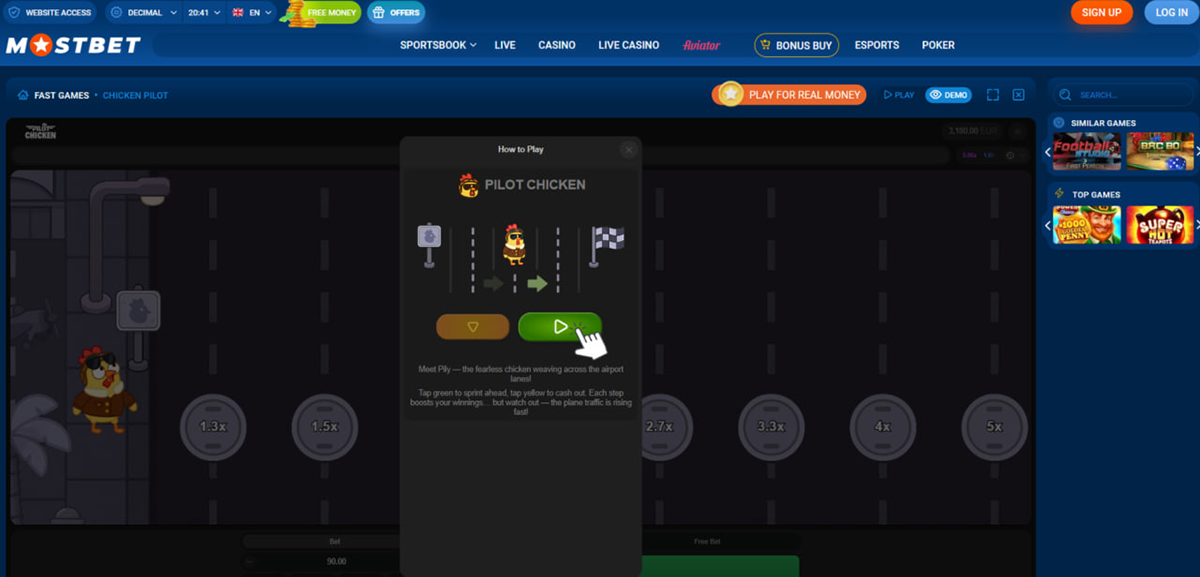
Pilot Chicken game: playing on Mostbet
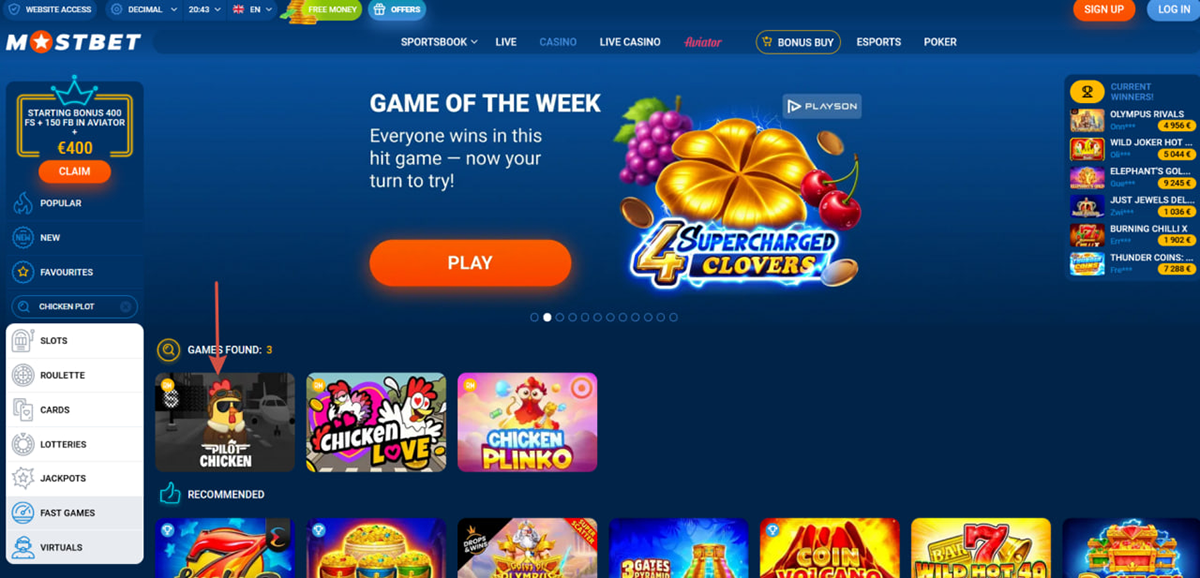
I played most of my sessions on Mostbet, where I first noticed Pilot Chicken while browsing the instant games section. I registered an account, made a small deposit and started with a few short sessions to understand how the rounds behave in real conditions. The game opened directly in the browser and did not require any additional installation.
The Pilot Chicken online version worked consistently during my tests, so I could focus on the gameplay itself. I mainly used Mostbet because it was easy to return to the same sessions and continue testing different settings and bet sizes.
- Game search. I found the game through the search bar in the instant games section without scrolling through the full lobby.
- Account setup. Registration was simple, and after confirming the account I was able to start playing without delays.
- Session testing. I tried several short sessions with different difficulty levels to compare how the rounds behave.
- Game stability. The interface stayed responsive and the rounds loaded quickly during the entire testing period.
Overall, Mostbet turned out to be a convenient platform for testing because everything worked predictably. Once the game was opened, it was easy to repeat sessions and observe how the multiplier behaves under different conditions.
Real money and demo modes
While testing the Pilot Chicken sessions, I noticed that the game is available in both demo and real-money modes. I tried the free version first just to understand the controls, but most of my testing was done with real bets. Playing the Pilot Chicken casino version with actual money felt noticeably different because every decision about the cashout timing became more important.
| Mode | Demo Version | Real Money Version |
| Balance | Virtual credits provided by the game | Uses real account balance |
| Risk Level | No financial risk | Each round affects real funds |
| Purpose | Learning the controls and pace | Full gameplay experience |
| Multiplier Behavior | Same mechanics and timing | Same mechanics and timing |
| Player Decisions | More experimental approach | More careful cashout timing |
| Session Feel | Relaxed testing | Higher concentration required |
From my experience, the mechanics behaved the same in both modes, but real-money sessions required more discipline. The demo mode helped me understand the rhythm of the rounds, while real play showed how important it is to choose the right moment to stop the run.
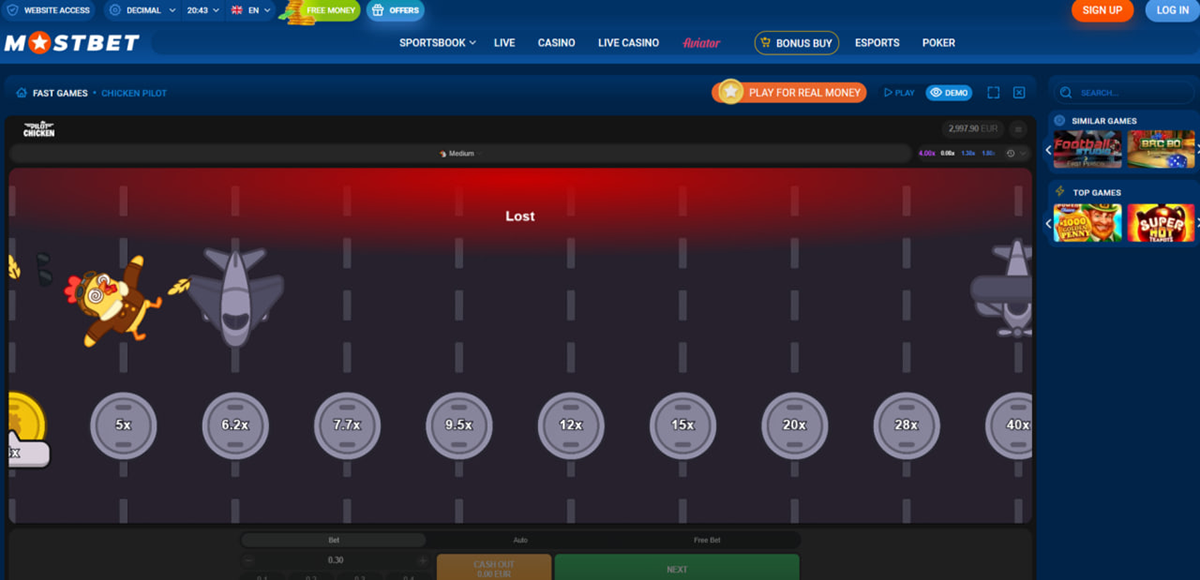
Pilot Chicken game strategies I tested
During my sessions I tried several approaches to understand which strategies make sense in practice. One thing became clear very quickly — there are no programs or systems that can predict the results in advance. Despite various claims online, I did not find any automated method that could reliably improve results. The Pilot Chicken game is built around independent rounds where the only real control comes from choosing the right moment to cash out.
I started with simple methods and repeated short sessions to see which ones felt stable. The most reliable approach was using small bets and setting a clear multiplier target before each round. This made the sessions more controlled and prevented sudden losses after several successful runs.
- Early cashout approach. I often stopped the round at relatively small multipliers, which helped keep the balance more stable during longer sessions.
- Difficulty switching. I mainly stayed on Easy and occasionally tried Medium to compare how quickly the risk increases.
- Short sessions. Instead of long continuous play, I tested several short sessions, which made results easier to track.
- Fixed bet size. Keeping the same stake for multiple rounds worked better than constantly changing bet amounts.
From my testing experience, the strategies that worked best were the simplest ones. Careful cashout timing and consistent bet sizes produced more predictable sessions than aggressive attempts to reach very high multipliers.
Similar games from other providers
While testing the sessions, I also looked at a few similar titles built around the same step-based multiplier idea. These games follow a structure close to Pilot Chicken, where each move increases the payout and the round can end at any moment. I noticed that several comparable titles come from the InOut studio, which focuses on this type of crash-style arcade gameplay.
| Game | Provider | Key Idea | Main Difference |
| Chicken Road | InOut | Step-based crash gameplay with multiplier growth | Simpler structure with fixed progression system |
| Chicken Road Race | InOut | Lane-based movement with adjustable difficulty | Longer tracks and multiple difficulty lengths |
| Cricket Road | InOut | Step-based multiplier progression | Sports theme with slightly different pacing |
All of these titles are developed by InOut and follow a similar design philosophy, where short rounds and multiplier growth define the gameplay. The main differences come from themes, pacing and difficulty settings, while the core mechanics remain easy to recognize for players familiar with this type of game.
Pilot Chicken game: my final impressions
After several sessions, I found Pilot Chicken game easy to understand but still engaging enough to keep testing different approaches. The rounds are short and the controls are simple, which makes it possible to start playing almost immediately after registration. Most of the decisions come down to timing, and that is what defines the overall experience.
From my perspective, the game works best in shorter sessions where it is easier to control the balance and observe how the multipliers behave. The mechanics are straightforward, but the changing risk levels keep the gameplay from feeling repetitive.
Overall, the game feels technically stable and predictable in terms of structure, even though the results of individual rounds always remain uncertain. After testing both demo and real-money sessions, I can say that the experience matched what I expected from this type of multiplier-based gameplay.
FAQ
What is Pilot Chicken?
This is a step-based multiplier game where each move increases the potential payout until the player decides to cash out.
How to play Pilot Chicken?
You place a bet, choose a difficulty level, move step by step, and stop the round at the chosen multiplier.
Can I try Pilot Chicken before betting real money?
Yes, a free version is usually available so players can test the controls and gameplay without risk.
Is Pilot Chicken game difficult to understand?
No, the rules are simple and most players understand the mechanics after a few rounds.
Where can I play Pilot Chicken game online?
The game is available in online casinos that support instant multiplier titles.
