
Chicken vs Zombies is a step-based crash game where the multiplier grows as the chicken moves forward and the round can end at any moment if a zombie lands a hit. The article explains how the game works, breaks down its difficulty levels, describes the math model behind each run and outlines the elements that shape strategy and pacing. Readers will also find information about availability, betting limits, interface features and the overall structure that defines this release from InOut.
Game characteristics
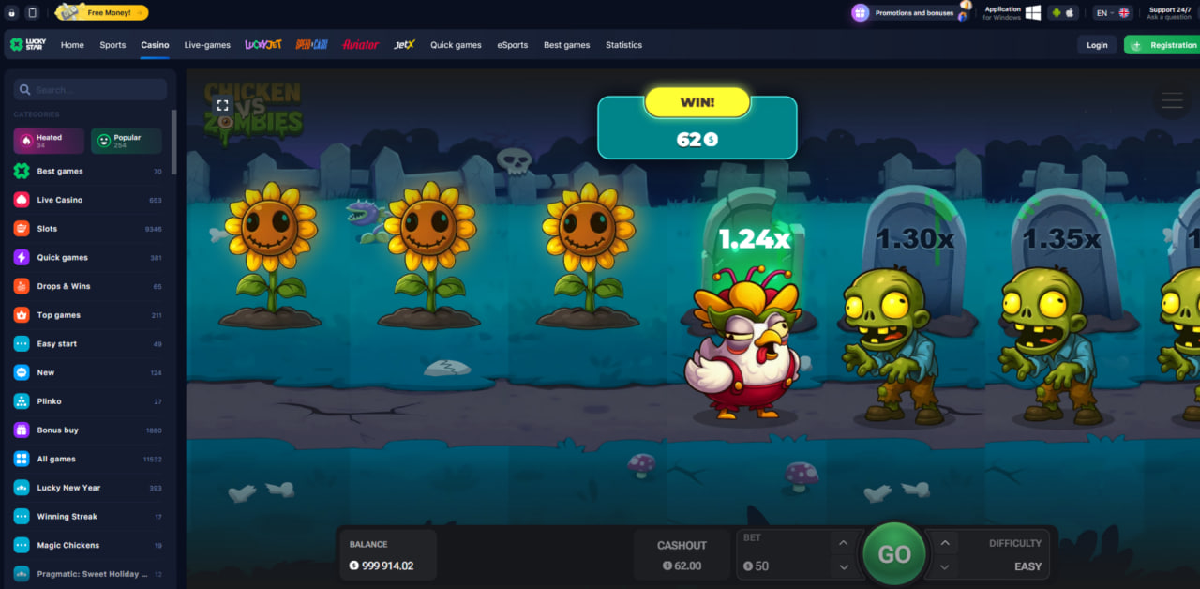
Chicken vs Zombies is built as a single-player crash title with a fixed route, predefined zombie counts and a stable progression system tied to four difficulty levels. Each run follows a clear sequence: set the stake, choose the mode, move step by step and decide when to cash out. Such structure keeps the pace steady and allows the player to focus on timing rather than reacting to unpredictable spikes.
The math model relies on controlled variance. The number of steps, the density of zombies and the multiplier curve change with the selected mode, which forms a consistent balance between length, pressure and potential payout. This makes the Chicken vs Zombies game suitable for players who want a predictable framework without losing the tension inherent to crash mechanics.
| Parameter | Value |
| RTP | 95.5% |
| Difficulty levels | Easy, Medium, Hard, Hardcore |
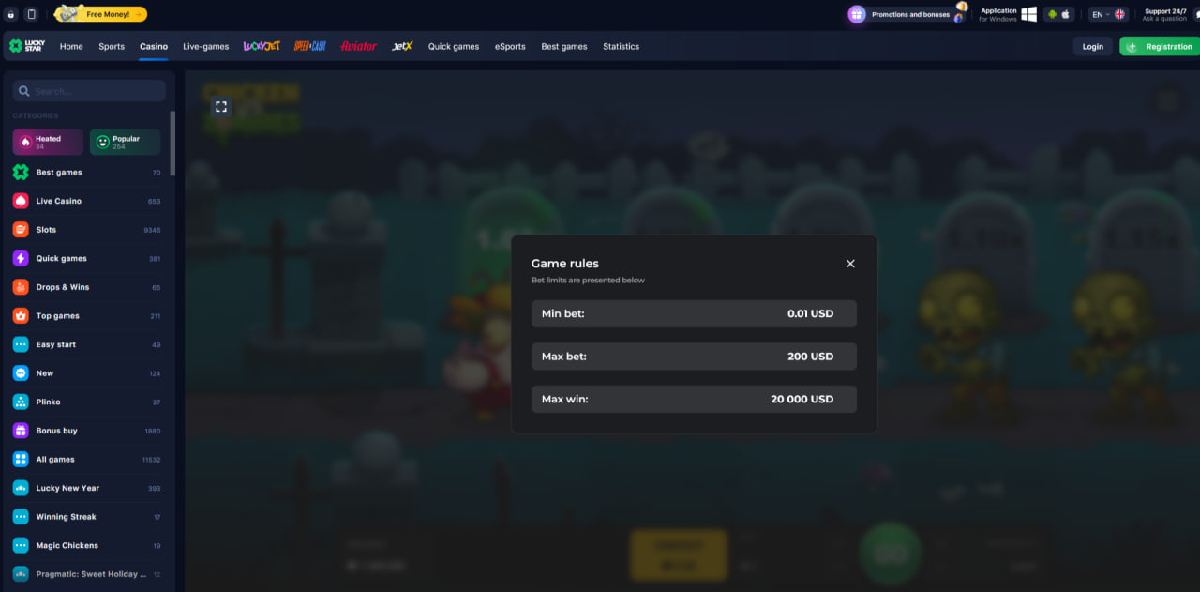
| Min bet | 0.01 USD |
| Max bet | 200 USD |
| Max win | 20,000 USD |
| Release date | 23.10.2025 |
| Mode | Single-player |
These characteristics reflect the overall logic of the release. The game does not rely on random route shifts or irregular jumps in multiplier speed. Instead, it uses a structured layout where tension grows smoothly as the player advances. Because of this, sessions stay readable even on higher modes, though the margin for error becomes narrower.
The final outcome always depends on when the player chooses to stop the run. This design keeps each round concise and prevents prolonged stagnation, which is often appreciated in modern crash titles. It also gives the developer room to maintain a balanced risk curve across all four levels.
Chicken vs Zombies Inout
InOut is a studio focused on structured crash games built around clear movement patterns and short, controlled rounds. Their titles use predictable math models and simple themes, which keeps gameplay easy to follow from the first session.
The company gained recognition with Chicken Road and Chicken Road 2 – two classic releases built on a route-based system and steady multiplier growth. These games shaped the core style of InOut, centred on minimalism, clarity and consistent pacing.
Chicken vs Zombies follows the same direction but introduces a new setting and a denser obstacle field. The result is a title that feels familiar yet distinct, expanding the studio’s catalogue without abandoning its established design principles.
Chicken vs Zombies: Where to play
Chicken vs Zombies is available in several online casinos that feature crash titles from InOut. The game is usually listed in the instant-win or crash section, and most platforms provide both a demo mode and a real-money version. Navigation is straightforward: the title appears in search results as soon as the name is entered into the main bar.
Some casinos include the game directly in curated crash collections. Lucky Star, for example, places it next to other step-based releases from the same provider, which helps players discover the title even without using the search tool.
- Open the casino website through a browser or mobile version.
- Locate the search bar on the main lobby screen.
- Enter Chicken vs Zombies and select the game card that appears.
- Choose demo mode or launch the real-money version after logging in.
The search method works on nearly all platforms, including sites where crash games are grouped together in larger categories. If the casino supports filtering by provider, selecting InOut will also display the title alongside Chicken Road and other releases.
Before starting a session, the player should ensure that the casino offers the crash section in their region. Licensed operators typically refresh their catalogues regularly, so the availability of the game may vary depending on jurisdiction.
Chicken vs Zombies: Game rules
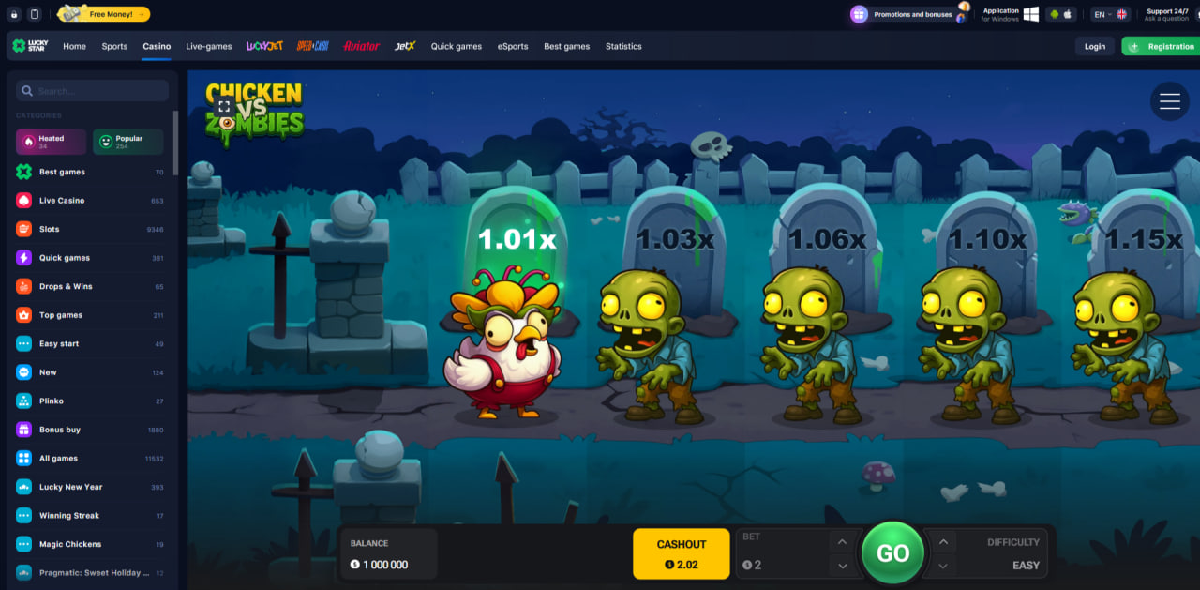
The rules of Chicken vs Zombies are straightforward: the player selects a stake, chooses a difficulty level and starts the run. The chicken moves forward step by step, and each successful move increases the multiplier. A round ends the moment a zombie strikes, so the outcome depends on how long the player decides to stay in the run. This structure makes easy to read while still keeping tension throughout each session.
The layout of the field, the number of zombies and the multiplier curve depend on the selected mode. Because these elements are fixed, the player can anticipate how long a typical run may last. This consistency is also what separates the title from other crash games and shapes the pacing of the Chicken vs Zombies game.
| Element | Description |
|---|---|
| Movement | One step forward per action, multiplier grows on each step. |
| End of round | Triggered when a zombie hits the chicken. |
| Cashout | Available at any moment before a hit. |
| Difficulty | Four modes with different zombie counts and step lengths. |
| Bet limits | From 0.01 USD to 200 USD per round. |
The player’s goal is to balance progression and timing. Cashing out early provides stability, while waiting for higher multipliers introduces more pressure. The fixed structure of the field ensures that each round follows a predictable arc, yet the exact stopping point remains the main decision factor.
Because the rules do not change between casinos, the experience stays the same across all platforms that host the game. This allows players to explore different levels and develop their own patterns without adjusting to new mechanics each time.
Demo mode and real-money play
The demo version of Chicken vs Zombies replicates the full mechanics without affecting the player’s balance. It shows the same movement pattern, zombie placement and multiplier growth, so every run matches the behaviour found in the paid version.
The real-money format follows identical rules, but each decision carries financial weight. Timing becomes more deliberate, and the overall pace feels sharper compared to the demo. This transition is smooth because the structure remains unchanged in the Chicken vs Zombies game.
Casinos usually place both modes on the same game card, allowing the player to switch instantly after logging in. This removes extra navigation and keeps the flow consistent.
Strategies and their effectiveness
Players often look for patterns that could improve results in Chicken vs Zombies, but the game is built around independent rounds. Each step has its own probability, and previous outcomes do not influence the next attempt. Because of this, any approach should be viewed as a way to structure decisions rather than a method to force predictable results.
Most strategies focus on timing and discipline. They help organise the session and define when to cash out, but they cannot override the underlying math model of the Chicken vs Zombies game.
- Early exit – cashing out after a few steps to stabilise outcomes over many rounds.
- Moderate progression – waiting for mid-range multipliers while avoiding long runs.
- Fixed pattern – using the same cashout point regardless of difficulty or previous results.
These approaches can make gameplay more structured, yet none of them eliminate variance. The multiplier curve and zombie layout remain unchanged, and the system does not adapt to player behaviour. This is why a strategy may feel consistent in the demo but behave differently in real-money sessions.
Anyone using timing-based methods should treat them as tools for managing pace, not as shortcuts to guaranteed outcomes. The controlled environment of Chicken vs Zombies Inout supports steady decision-making, but the risk of a sudden hit is always present.

Mobile version
Chicken vs Zombies works smoothly on mobile browsers, so the game can be launched directly on a casino website without installing an app. The interface adjusts to smaller screens, keeping the step controls, multiplier display and cashout button easy to reach.
Most casinos use adaptive layouts that load the same version of the game on both desktop and phone. This means the pacing, difficulty modes and overall behaviour stay identical, and sessions can be continued on any device.
The mobile format is also suitable for short rounds, as navigation is minimal and the game responds quickly to taps. This keeps the flow consistent even when switching between tabs or opening the casino from a home-screen shortcut.
FAQ
What is Chicken vs Zombies?
It is a step-based crash game where the multiplier increases as the chicken moves forward. A round ends when a zombie lands a hit, so the player must decide when to cash out.
Is the game available in demo mode?
Yes, most casinos provide a demo version that mirrors the behaviour of the real-money format. It uses the same difficulty levels and multiplier model.
How do I find the game in a casino?
Enter the name into the lobby’s search bar. The game card usually appears instantly, allowing access to both demo and real-money versions.
Do strategies guarantee stable results?
No. Strategies can help organise cashout timing, but the outcome of each step is independent, and no method removes variance from the system.
Can I play on a mobile device?
Yes. The game runs through the mobile browser of the casino site, keeping controls responsive and identical to the desktop version.
